

A Photo Essay
Spiti, in Two Seasons
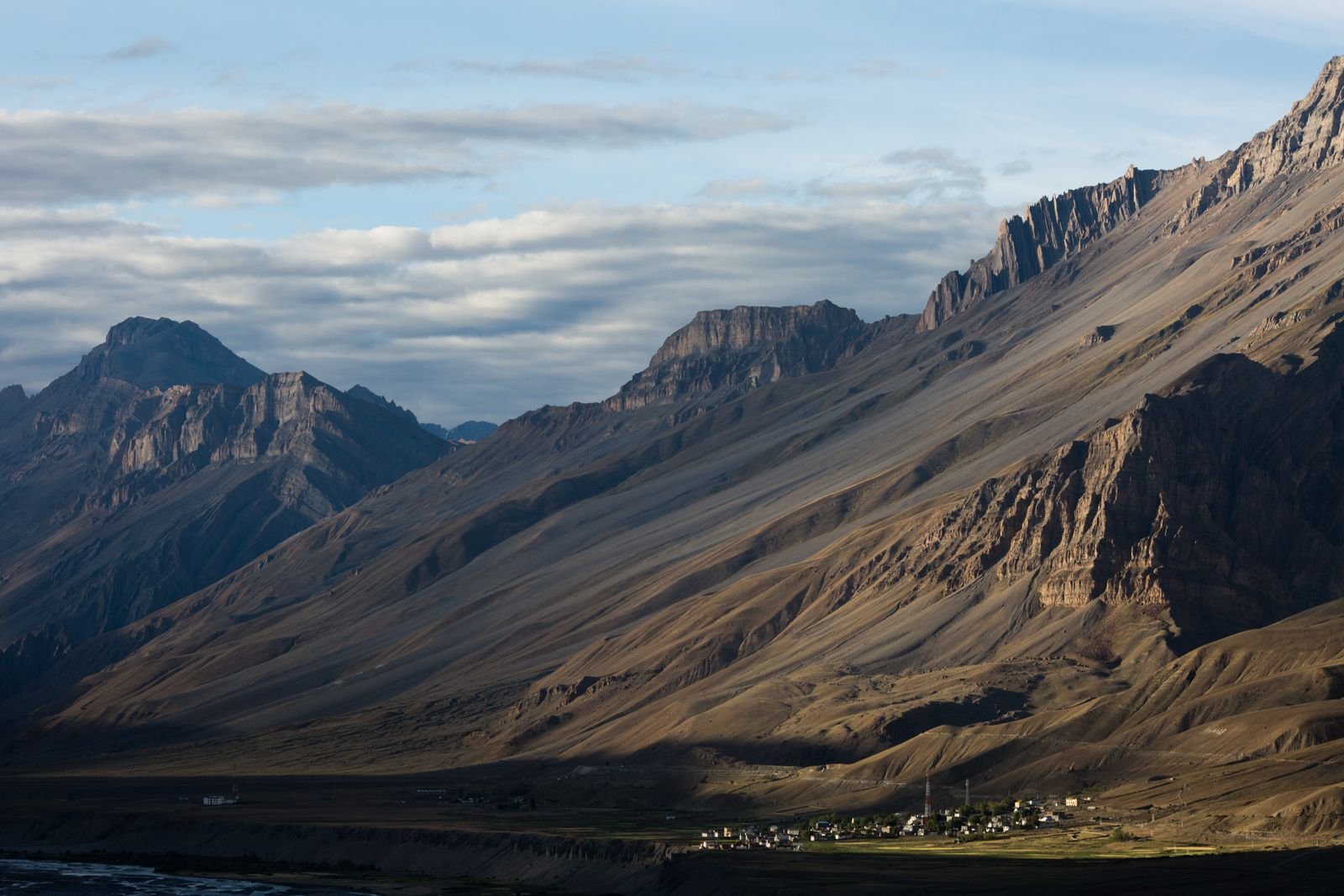
A valley held at nearly four thousand metres, seen once in the bare ochre light of the warm months and once under winter snow: the same ground, kept by the same few villages.
Spiti Valley, Himachal Pradesh. Photo: simarphotos / Pexels
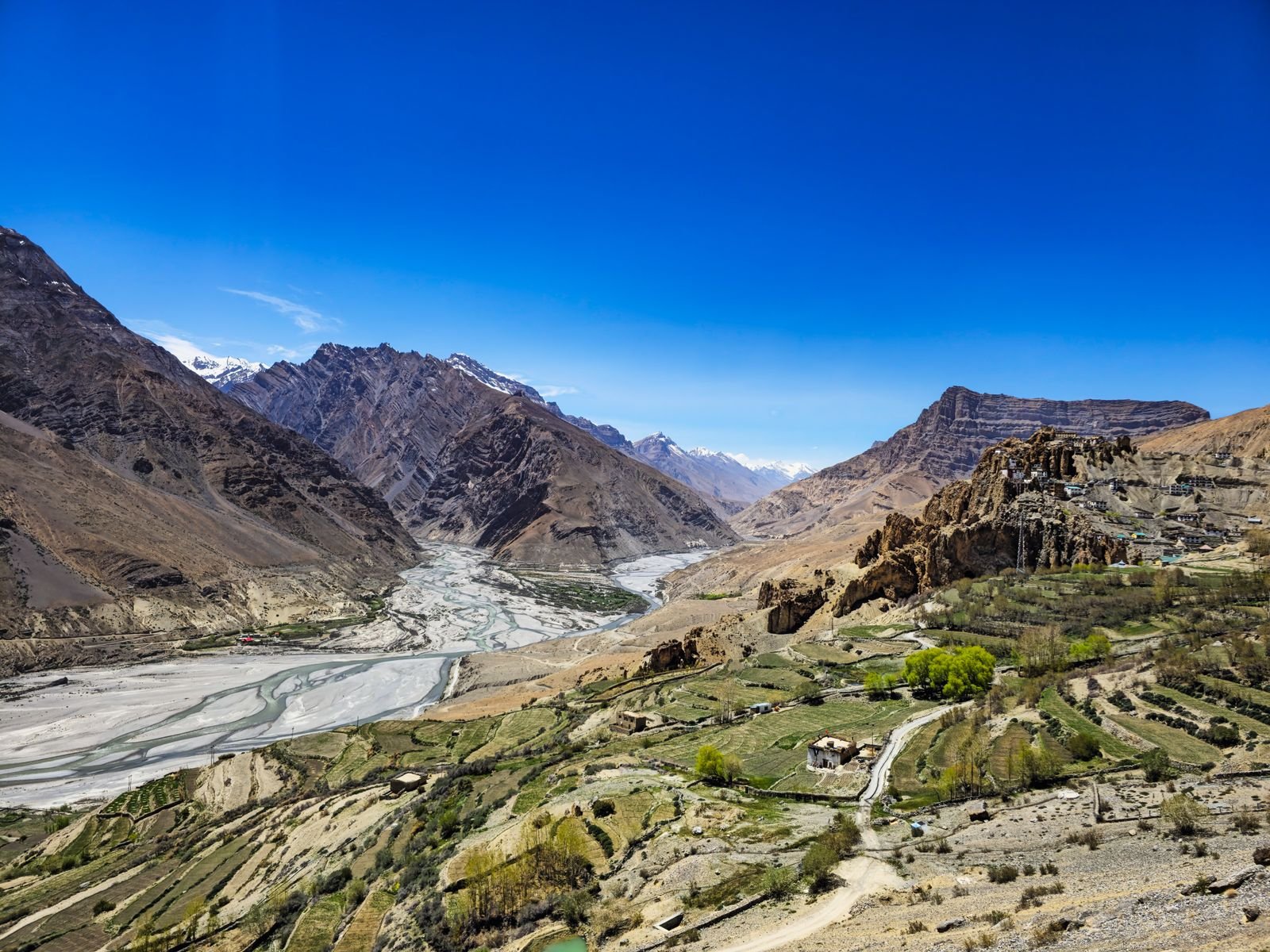
Spiti does not ease you in. The road climbs out of the green country and, somewhere past the last orchard, the colour drains from the land: ochre, grey, a rust that turns to violet when a cloud crosses it. At this height the sky seems to sit closer, and the river, a pale braid across a wide stony bed, feels like the only soft thing for miles.

Where the snow settles
In winter the valley turns inward. Flat-roofed houses huddle on the slope with their backs to the wind, roofs stacked with fodder and fuel against the months ahead. Smoke is the only moving thing. Nothing here is built for show; every wall has a job, and its thickness is the story of the cold.
In Spiti, distance is not counted in kilometres but in what you must carry to cross it.

A note
Kibber is often described as one of the highest villages in the world reached by a motorable road. In the cold season the road is as much a hope as a fact.
A monastery on a hill
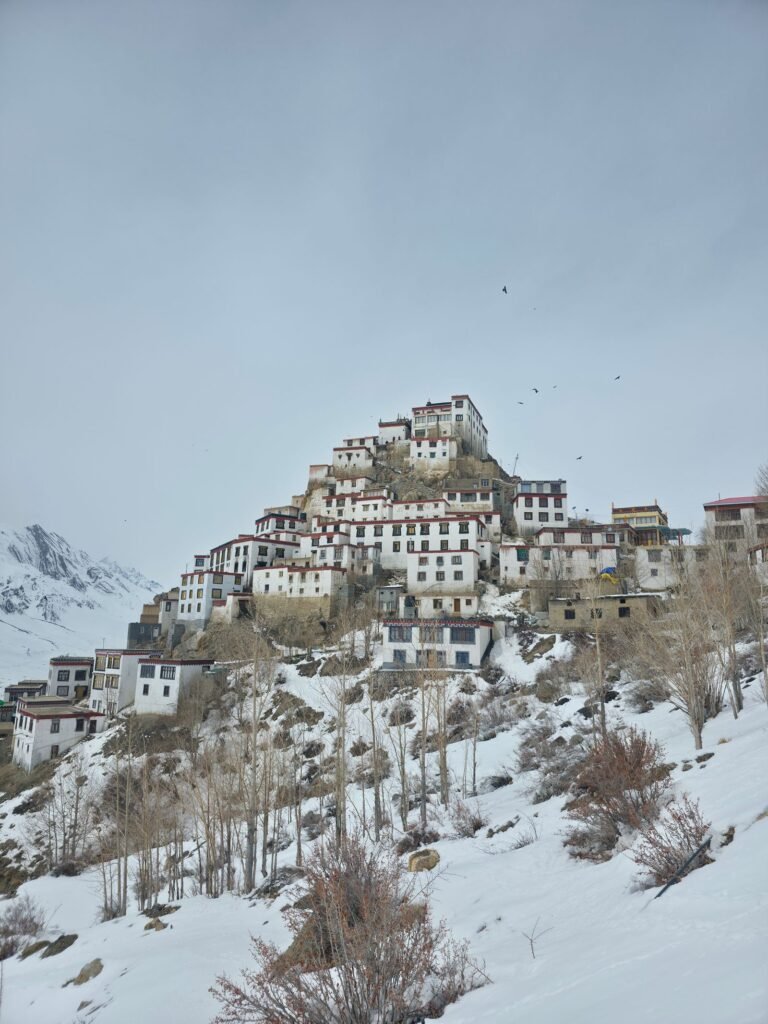
Key stands on a hill above the Spiti river, a stack of whitewashed rooms that has grown by accretion, one century leaning on the one before. In snow it looks less like a building than like something the hill decided to keep. It belongs to the Gelug school of Tibetan Buddhism, and the work of its day is quiet: butter lamps, chanting, tea.
A working monastery. Visitors are guests in a place of daily practice.
Up here the landscape does the talking. The people mostly keep the fire going.

A note
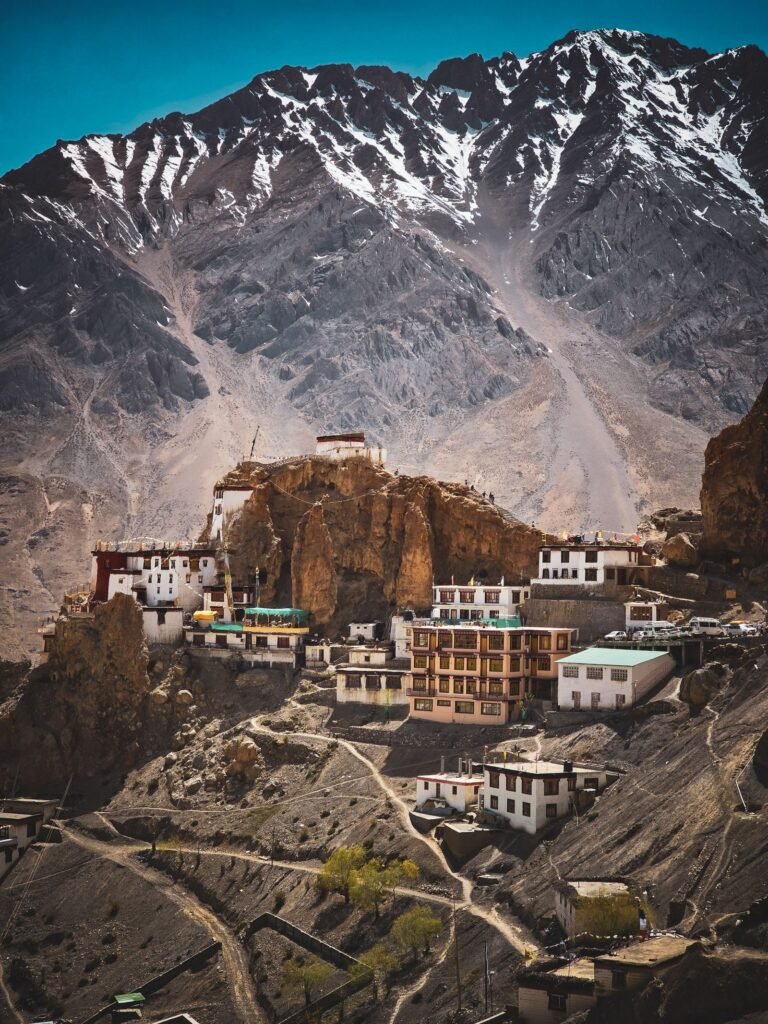
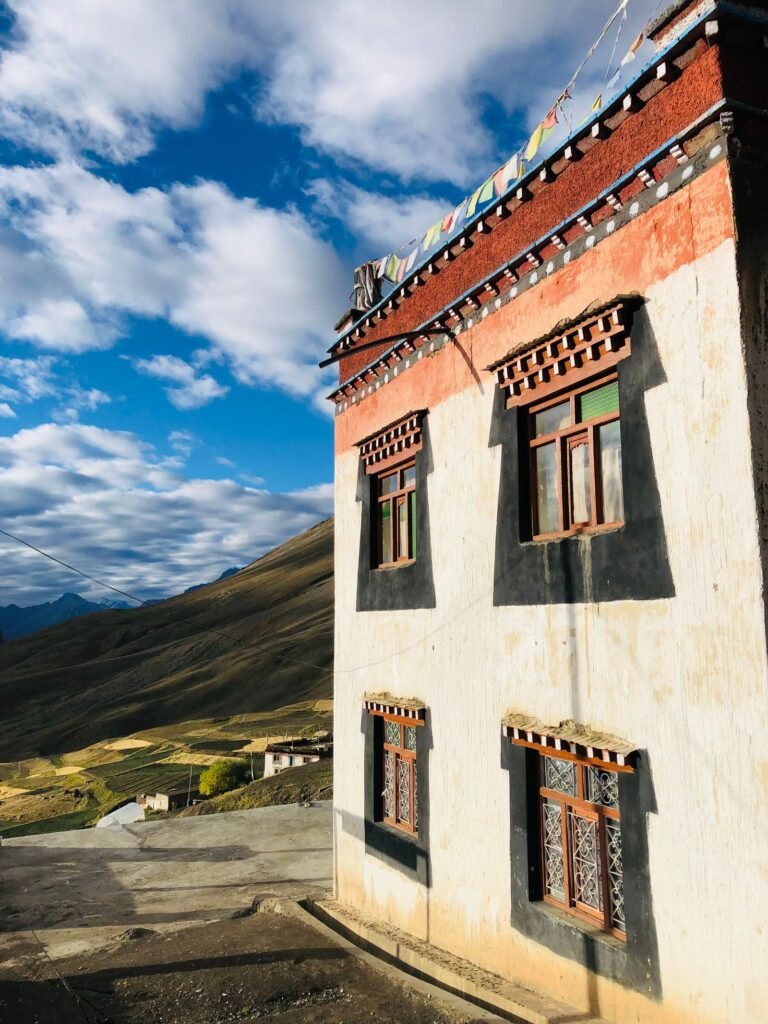
Mud, stone and timber, the materials the valley itself provides. Houses like this last because they are looked after, season by season.
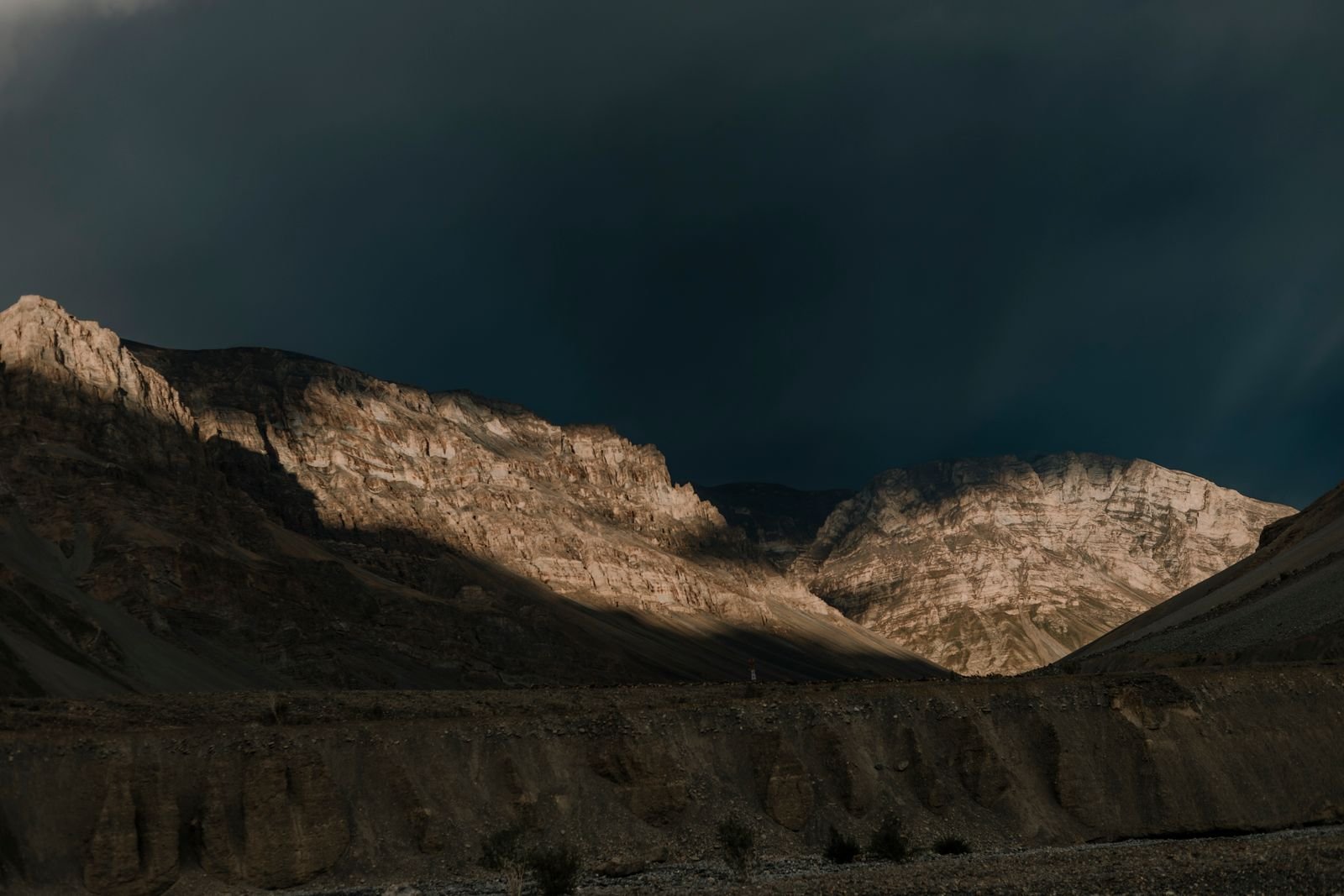
Then the weather turns, the light goes out of the ridge, and you remember how small a day is here.